UAE visa consultant with 10+ years of experience guiding applicants through Dubai and UAE tourist, work, family, and Golden visa applications.
Getting from a Dubai visa to an Emirates ID may be hard and sometimes too much to handle. Newcomers who want to live in the UAE must understand every stage of this procedure. There are a lot of regulations and deadlines to keep track of, so it’s important to understand how they all fit together to make things go more smoothly. This article explains all you need to know about getting your Emirates ID when you get to Dubai, so you’ll be ready for every step of this vital trip. Having a detailed timetable at your fingertips makes a big impact, whether you’re moving for job or fun.
The Dubai visa and Emirates ID are intrinsically linked, as the latter serves as an essential identification document for residents. Upon entering Dubai with a valid visa, you become eligible to apply for the Emirates ID, which confirms your residency status in the UAE.
While obtaining a Dubai visa allows entry into the country, it is not sufficient by itself for living and working legally. The Emirates ID solidifies this status and facilitates various administrative processes.
Why Emirates ID Is Not Issued Automatically
Emirates ID is not issued automatically after obtaining a Dubai visa due to regulatory protocols. The UAE government requires individuals to undergo specific processes, including medical examinations and biometric data collection, before the card can be issued.
This multi-step approach ensures that all applicants meet health and security standards established by the authorities. Compliance with these procedures also helps maintain accurate demographic records within the country’s immigration system.
Difference Between Visa Approval and Residency Activation
Visa approval signifies that your application to enter the UAE has been granted. It allows you to travel to Dubai but does not confer residency status. This is merely a gateway for further proceedings.
Residency activation, on the other hand, occurs after completing essential processes like medical testing and biometrics collection. Only upon successful completion of these steps can one obtain legal residency in the Emirates, along with an Emirates ID.
What Happens First After Entering Dubai on a Visa
Upon arriving in Dubai on a visa, individuals must first understand the distinction between an entry permit and a residency visa. The entry permit allows one to enter the UAE, while the residency visa grants permission for long-term stay.
The Emirates ID application process officially begins after entering Dubai. This step is crucial for obtaining identification that facilitates various services within the emirate.
Entry Permit vs Residency Visa Explained
The entry permit allows foreign nationals to enter Dubai for a specific purpose, such as tourism or employment. It serves as an initial approval that grants access into the country but does not confer residency status.
In contrast, the residency visa is issued after fulfilling certain requirements and confirms your right to reside in Dubai long-term. This visa enables you to work, live, and enjoy various services within the UAE.
When the Emirates ID Process Officially Starts
The Emirates ID process officially begins once you enter Dubai on a valid residency visa. This step is crucial, as it sets the stage for obtaining your Emirates ID and accessing various services in the UAE.
Upon arrival, ensure that all required documentation is ready. Initiating this process promptly can help avoid unnecessary delays and complications as you navigate through subsequent steps toward securing your Emirates ID.
To fully activate your residency and receive your Emirates ID, you must complete the specific requirements for a Dubai visa after arrival within the legal timeframe provided by the authorities.
Step 1 – Medical Test After Dubai Visa Entry
After entering Dubai on a visa, the first essential step is to undergo a medical test. This requirement ensures that individuals are free from communicable diseases, aligning with public health regulations in the UAE.
All expatriates must complete this medical examination, which typically includes blood tests and chest X-rays. It’s advisable to have necessary documents ready, such as your passport and entry permit, for a smooth testing process.
Who Must Complete the Medical Test
All expatriates entering Dubai must complete a medical test as part of the visa process. This requirement applies to individuals seeking employment or residency in the UAE.
Additionally, dependents sponsored by expatriates are also required to undergo this medical examination. It ensures that all newcomers are free from communicable diseases and meet health standards set by local authorities.
Documents Required for the Medical Test
To complete the medical test required for obtaining an Emirates ID, specific documents are essential. Applicants should present their original passport along with a copy of the visa page. Additionally, they need to provide recent passport-sized photographs that meet the UAE’s photo requirements.
It is advisable to carry any previous medical records if applicable. These documents help facilitate a smooth process during your visit to the medical testing center.
How Long Medical Test Results Usually Take
The medical test results for individuals entering Dubai typically take between 24 to 48 hours. This timeframe depends on the specific clinic and its processing capabilities.
In some cases, delays may occur due to high demand or logistical issues. It’s advisable to plan accordingly and allow extra time in your schedule to accommodate potential unforeseen delays in receiving your results.
Step 2 – Emirates ID Biometrics Appointment
After completing the medical test, applicants must attend an Emirates ID biometrics appointment. During this session, personal data such as fingerprints and a facial photograph are collected to verify identity.
Biometrics appointments typically occur at designated centers across Dubai. It is essential to arrive on time, as delays can lead to rescheduling or complications in the issuance of your Emirates ID.
What Happens During Biometrics Collection
During the biometrics collection process for the Emirates ID, applicants will have their fingerprints and facial photographs taken. This is a secure procedure designed to verify identity and ensure accurate documentation.
The collected data is then processed in a centralized system. It helps facilitate various government services while maintaining high security standards. The entire appointment typically lasts around 30 minutes, ensuring efficiency for all parties involved.
Where Emirates ID Biometrics Are Taken
Emirates ID biometrics are typically collected at designated centers throughout the UAE. These include various Emirates Identity Authority (EIDA) offices and authorized typing centers that facilitate the application process.
Applicants can also find biometric collection services in some hospitals and clinics approved by the government. It’s crucial to schedule an appointment beforehand to ensure a smooth experience during your visit.
Common Reasons Biometrics Appointments Get Delayed
Biometric appointment delays often stem from scheduling conflicts at the service centers. High demand can lead to limited availability, causing applicants to wait longer than anticipated for their appointments.
Additionally, incomplete documentation may require rescheduling or additional verification steps. If the required documents are not provided upfront, this can further hinder the timely processing of Emirates ID applications and extend waiting periods significantly.
Step 3 – Residency Visa Issuance
After completing the medical test and biometrics, the next phase is residency visa issuance. Approval from both processes is essential for receiving your residency visa, which legally permits you to reside in Dubai.
Residency can be issued digitally or through passport stamping. Each method has its advantages, depending on personal preference and requirements. This step solidifies your legal status as a resident of the UAE while enabling access to various services.
How Medical and Biometrics Approval Leads to Residency
Medical and biometrics approvals are critical steps in the residency visa process. Successfully passing the medical test ensures that applicants meet health requirements, confirming they pose no risk to public health.
Once the medical results are approved, individuals must complete biometric data collection. This step captures fingerprints and facial recognition, which are essential for identity verification. Together, these approvals pave the way for obtaining a residency visa in Dubai.
Digital Residency Visa vs Passport Stamping
The Digital Residency Visa offers a convenient alternative to traditional passport stamping. This electronic format simplifies the process, allowing for faster access to residency documentation without the need for physical stamps in one’s passport.
In contrast, passport stamping requires an official stamp upon arrival and residency approval. While both serve as proof of residency, digital documentation often expedites administrative procedures and enhances accessibility for expatriates living in Dubai.
Step 4 – Emirates ID Processing and Delivery
After the issuance of your residency visa, the Emirates ID processing begins. The relevant authorities will review all documents and information to ensure compliance with regulations.
Typically, Emirates ID delivery occurs within a few days to several weeks after residency approval. Applicants can monitor their application status online for updates on processing time and expected delivery dates.
How Long Emirates ID Takes After Residency Issuance
After the residency visa is issued, the processing time for Emirates ID typically ranges from 7 to 10 working days. However, this duration may vary depending on specific circumstances and any potential administrative delays.
Once your application is processed, you will receive a notification regarding the delivery of your Emirates ID. It’s important to monitor updates through official channels to ensure timely receipt of your identification card.
How to Track Emirates ID Status
To track your Emirates ID status, visit the official Federal Authority for Identity and Citizenship (ICA) website. You can enter your application number to check the current status of your ID processing.
Alternatively, you can use the mobile app provided by ICA for a more convenient experience. This app allows you to receive real-time updates on your Emirates ID, ensuring you’re informed throughout the process.
What to Do If Emirates ID Delivery Is Delayed
If your Emirates ID delivery is delayed, first check the status online through the official government portal or app. This will provide you with updates regarding your application and any potential issues that may have arisen.
Should you find that there are no clear updates, contact the relevant authority directly for assistance. They can offer guidance on how to resolve any complications affecting your Emirates ID issuance.
Dubai Visa to Emirates ID Timeline Overview
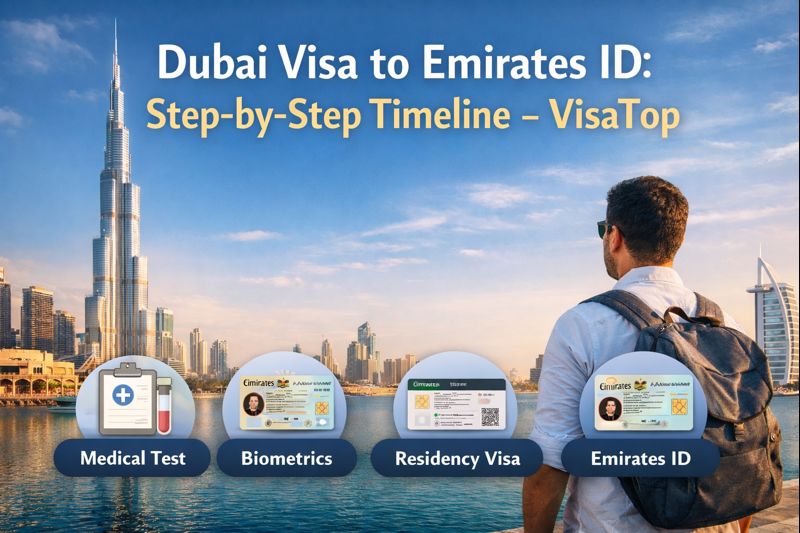
The timeline from obtaining a Dubai visa to receiving your Emirates ID typically spans several weeks. It involves multiple steps, including medical tests, biometrics appointments, and residency visa issuance.
Factors such as document completeness and appointment availability can influence the duration of this process. Understanding these timelines helps applicants manage expectations and ensures a smoother transition into life in Dubai.
Typical Timeline From Entry to Emirates ID
The typical timeline from entry into Dubai on a visa to receiving an Emirates ID generally spans around 2 to 4 weeks. This timeframe includes the completion of mandatory procedures such as medical testing, biometrics collection, and residency visa processing.
Once these initial steps are completed, the issuance of the Emirates ID usually takes an additional few days. Timely adherence to each step can significantly streamline this process.
Factors That Speed Up or Slow Down the Process
The speed of transitioning from a Dubai visa to Emirates ID largely depends on the efficiency of document submission. Timely completion of medical tests and biometrics appointments can significantly accelerate the process.
Conversely, delays often arise from incomplete paperwork or missed appointments. Additionally, processing times may vary based on the volume of applications at immigration centers and any specific requirements related to individual cases.
Common Mistakes That Delay Emirates ID Issuance
Delaying the medical test is a common mistake that can significantly postpone Emirates ID issuance. Applicants often underestimate the importance of completing this step promptly, leading to extended wait times.
Missing biometrics appointments also contributes to delays. Failure to attend or reschedule these critical meetings can stall the entire process. Additionally, providing incorrect or incomplete documentation may result in further complications and setbacks.
Delaying the Medical Test
Delaying the medical test can significantly hinder your progress in obtaining an Emirates ID. This step is crucial for verifying your health status and eligibility to reside in Dubai. Any postponement may lead to complications with subsequent processes.
Additionally, a delayed medical test could extend your overall timeline, ultimately affecting your residency approval. Timely completion ensures a smoother transition from visa entry to acquiring essential identification documents like the Emirates ID.
Missing Biometrics Appointments
Missing a biometrics appointment can significantly delay the issuance of your Emirates ID. This crucial step involves collecting fingerprints, photographs, and personal data necessary for identity verification.
If you miss this appointment, you’ll need to reschedule promptly. Delays in scheduling can lead to longer processing times and potential complications with residency status. Staying on top of your appointments is essential for a smooth transition from Dubai visa to Emirates ID.
Incorrect or Incomplete Documentation
Incorrect or incomplete documentation can significantly delay the Emirates ID issuance process. Missing essential documents, such as a valid residency visa or identification proof, may lead to unnecessary setbacks.
Additionally, discrepancies in the information provided can raise red flags during verification. It is crucial to ensure that all submissions are accurate and comprehensive to avoid potential delays and complications in your application journey.
Can You Work or Open a Bank Account Before Emirates ID?
Before obtaining your Emirates ID, your eligibility to work is restricted. Employers typically require the Emirates ID as a key document for employment contracts and legal compliance. Therefore, starting a job without it may pose challenges.
When it comes to banking, most financial institutions in Dubai mandate an Emirates ID for account opening. Without this identification, you may face difficulties accessing essential banking services or managing finances effectively.
Work Eligibility Before Emirates ID
To work in Dubai, having a valid residency visa is essential. The Emirates ID serves as proof of your identity and residency status, which employers require for legal employment. Without it, securing a job can be challenging.
However, some companies may allow you to start working with just the entry visa while awaiting your Emirates ID. This practice varies by employer and should be confirmed before accepting any position.
Banking Requirements Linked to Emirates ID
To open a bank account in Dubai, possessing an Emirates ID is typically essential. Banks require this identification to confirm residency status and verify the applicant’s identity. The UAE government has linked banking services directly to the Emirates ID for enhanced security.
Without an Emirates ID, obtaining financial services can be challenging. Most banks will not process applications or provide accounts until you present this crucial document.
What to Do If Your Emirates ID Is Taking Too Long
If your Emirates ID is taking longer than expected, first check the status online through the official government portal. This can provide insights into any delays or issues affecting your application.
If there are no updates, consider reaching out to the relevant authority directly for clarification. Be prepared to provide your application reference number and other details for assistance in expediting the process effectively.
When Delays Are Normal
Delays in receiving your Emirates ID can be a common occurrence, especially during peak processing times. High demand for visas and IDs often results in longer waiting periods.
Additionally, administrative backlogs may occur due to various factors such as public holidays or system maintenance. It’s essential to remain patient and monitor the status of your application through official channels during these times.
When Delays Require Action
Delays in receiving your Emirates ID can be concerning, particularly if they exceed the typical processing time. If you find yourself waiting longer than expected, it’s essential to contact the relevant authorities. They can provide updates and clarify any issues with your application.
Additionally, consider checking your documentation for completeness and accuracy. Missing or incorrect information often leads to unnecessary holdups that require immediate rectification before proceeding further.
How VisaTop Helps With Dubai Visa to Emirates ID Processing
VisaTop provides expert guidance throughout the Dubai Visa to Emirates ID processing journey. Our team ensures that all requirements are met, reducing the likelihood of delays.
We offer tailored support for timeline management and compliance. This proactive assistance helps clients navigate potential obstacles efficiently, ensuring a smoother transition from visa issuance to obtaining an Emirates ID. Trust VisaTop to streamline your experience in Dubai.
Timeline Guidance and Compliance Support
Navigating the process from Dubai Visa to Emirates ID can be intricate. Timely guidance is essential for meeting all requirements efficiently. Understanding each step helps in avoiding pitfalls that could lead to delays.
Compliance support ensures that applicants adhere to the latest regulations and procedures. By staying informed about changing policies, individuals can streamline their journey, making the transition smoother and more successful.
Avoiding Delays and Post-Arrival Issues
Navigating the process from Dubai Visa to Emirates ID requires attention to detail. Ensuring all documentation is accurate and complete can significantly reduce delays. It’s crucial to stay informed about each step of the application process.
Moreover, promptly scheduling medical tests and biometrics appointments can help avoid unnecessary setbacks. Being proactive in following up on your status will facilitate a smoother transition into residency and identification as a new resident in Dubai.
Frequently Asked Questions – Dubai Visa to Emirates ID
Navigating the process from a Dubai Visa to an Emirates ID can raise several questions. Applicants often wonder how soon after arrival they should apply for their Emirates ID and whether a medical test is mandatory.
Another common inquiry involves the possibility of receiving an Emirates ID without having a residency visa. Many also seek clarity on what actions to take if their Emirates ID appointment gets delayed during processing.
How soon after arrival should I apply for Emirates ID?
It is advisable to apply for your Emirates ID as soon as you arrive in Dubai. Initiating the application process promptly ensures that you complete all necessary steps without unnecessary delays.
Typically, you should aim to submit your Emirates ID application within 30 days of entering the country on a residency visa. This timeline helps avoid potential fines and complications related to your residency status.
Is medical test mandatory for Emirates ID?
Yes, the medical test is mandatory for obtaining an Emirates ID. This requirement applies to all expatriates entering the UAE on a residency visa. The test ensures that applicants do not carry communicable diseases, aligning with public health regulations.
Failure to complete the medical examination can result in delays or denial of your Emirates ID application. Therefore, it is essential to schedule and undergo this test promptly after arrival.
Can Emirates ID be issued without residency visa?
Emirates ID cannot be issued without a residency visa. The Emirates Identity Authority requires valid residency status to process the ID application. This regulation ensures that all residents are documented appropriately.
Without a residency visa, individuals do not have legal status in the UAE, making it impossible to obtain essential identification like the Emirates ID. Therefore, securing your residency visa is crucial before applying for an Emirates ID.
What if my Emirates ID appointment is delayed?
If your Emirates ID appointment is delayed, it’s essential to remain patient. Delays can occur due to various reasons, including high demand or system issues. Regularly check the official website for updates on your appointment status.
Should the delay extend beyond a reasonable timeframe, consider contacting the relevant authority for assistance. They can provide clarity and ensure that any necessary actions are taken to expedite the process.
Key Takeaways – Dubai Visa to Emirates ID Timeline
The process from a Dubai visa to obtaining an Emirates ID involves several crucial steps. Understanding the connection between your visa and emirates ID is essential for a smooth transition. Key stages include completing a medical test, attending biometrics appointments, and securing residency approval.
Timelines can vary based on individual circumstances, but awareness of potential delays helps in planning accordingly. It’s important to stay proactive throughout this journey—ensuring all documents are accurate and deadlines are met will facilitate timely processing.
Leveraging professional services like VisaTop can streamline your experience, helping you avoid common pitfalls along the way. Keeping these factors in mind will prepare you for successful navigation of the Dubai visa to Emirates ID timeline.
Are you moving to the UAE soon? Make sure you are prepared for the administrative tasks that follow your landing. Check out this comprehensive guide on what to do after arriving in Dubai on a residency visa to stay compliant and organized.